
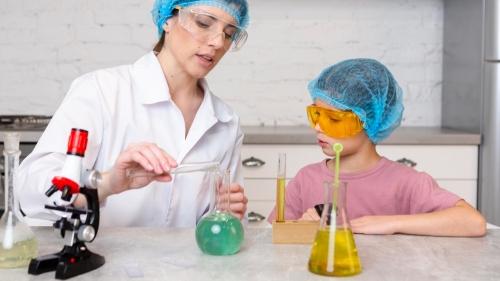
Biology becomes powerful when students move beyond reading textbook diagrams and begin observing real structures, specimens, and processes. In secondary schools—where adolescents transition into abstract and applied learning—biology laboratories play an increasingly critical role. Concepts like cell division, circulation, reproduction, digestion, genetics, ecology, and adaptation cannot remain theoretical if students are to develop real scientific literacy. This is why high-quality biology lab equipment and realistic anatomy models are indispensable in today’s education landscape. Ministries of Education, donor agencies, and World Bank-supported projects designing nationwide secondary science reforms are increasingly prioritizing practical biology assets because they influence student engagement, curriculum mastery, and achievement in national assessments. Reliable manufacturers for School Science Lab Instruments with experience in global supply understand that secondary schools require apparatus designed for frequent use, safe handling, and curriculum alignment. Such partners help project authorities convert classroom diagrams into inquiry-based learning environments, enabling biology to become a “visible science” rather than a memorized subject.
What makes biology lab equipment from School Science Lab Instruments Manufacturers India so valuable for secondary education is its ability to transform invisible biological phenomena into concrete experiences. For instance, microscopes allow students to view cells, tissues, and microorganisms—concepts that otherwise remain abstract. Prepared slides help students compare plant and animal tissues, learn histology, and identify cell structures. Dissection tools enable exploration of organ structure and comparative anatomy, while ecology equipment supports investigations into soil composition, biodiversity, and photosynthesis. Anatomy models—human torso models, digestion sets, brain models, heart cutaways, skeletons, and reproductive system models—become powerful teaching aids that reinforce learning through three-dimensional visualization. Secondary learners often struggle with how organs are positioned and how systems interconnect; models bridge this gap. In global STEM projects and national modernisation schemes, these visual-tactile elements form the backbone of competency-based teaching. Schools that invest in well-made biology lab equipment therefore help students transition from textbook memorization to experiential science reasoning.
One factor that distinguishes effective biology laboratories from ineffective ones is the relevance and precision of the equipment supplied. Secondary school biology teachers do not simply need tools—they need tools mapped to curriculum outcomes. Reliable science manufacturers recognise this and design equipment to align with syllabus chapters such as respiration, circulation, genetics, health education, reproduction, evolution, taxonomy, life processes, and biotechnology fundamentals. For example, models of mitochondria, DNA structures, kidney units, fertilisation sequences, and skeletal systems allow teachers to explain complex concepts accurately. High-quality models are colour-coded, proportionally scaled, tactile, and labelled clearly to support guided instruction and self-learning. Well-calibrated microscopes and biological slides sharpen observational skills and make practical examinations meaningful. Procurement authorities—especially those handling World Bank-funded projects and multi-school tenders—prefer manufacturers who understand this curricular science rather than merely selling generic lab items. This alignment ultimately improves student learning outcomes and supports standardised national science competency development.
Beyond academic alignment, biology lab equipment and anatomy models help democratise science learning, especially across underserved and remote regions. Many secondary schools lack infrastructure for wet labs or specimen storage. Portable biology kits, classroom-friendly torso models, labelled organs, and durable microscopes decentralise laboratory access and bring inquiry directly into normal classrooms. With rugged packaging and long-lasting components, global buyers can deliver biology capabilities where traditional labs are delayed or impractical. Reliable manufacturers ensure that materials are wipe-clean, corrosion-resistant, child-safe and modular—ideal for continuous use in high-enrollment environments. For MOEs and international projects, this scalability is crucial. Investment in biology equipment becomes not just a purchase, but a tool for educational equity: rural schools, frontier communities, and refugee camps can offer the same biological experiences as capital-city institutions. National education planners increasingly recognize that modern biology learning must reach all learners—not just those near infrastructure-rich areas—and well-designed lab equipment makes this possible.
Sustainability and teacher enablement are equally important dimensions where trusted biology lab suppliers add value. Good laboratories do not depend solely on equipment—they depend on teacher confidence and continuity of use. Reliable suppliers provide manuals, labelled diagrams, dissection instructions, specimen usage guidelines, and maintenance protocols. This support is essential in regions where teachers may have had minimal biology practical training. When instructional resources accompany equipment, teachers feel empowered to run lessons rather than avoiding laboratory work. In World Bank-funded education programmes, where teacher capability gaps can undermine project success, such support dramatically increases practical lesson frequency. Moreover, reliable manufacturers supply spare parts, service assistance, and replacement components—ensuring sustainability across multiple academic cycles. Without such after-sales support, biology labs decay quickly as slides break, models lose labels, or microscopes fall out of calibration. Reliability keeps laboratories active rather than abandoned, protecting public investment and student opportunity alike.
Ultimately, the reason biology lab equipment and anatomy models matter so profoundly in secondary schools is their contribution to student identity formation and future readiness. Students who see a real heart valve or examine mitosis under a microscope begin to view themselves as investigators rather than passive learners. They gain confidence in handling tools, interpreting evidence, and explaining biological systems—skills essential for healthcare, biotechnology, environmental science, agriculture, and medical careers. Nations seeking to strengthen STEM pathways, improve research capability, or grow their healthcare workforce recognise the significance of early biological literacy. Reliable science lab manufacturers—especially those supplying through global tender ecosystems—contribute directly to these national ambitions by designing materials that develop tactile engagement, visual comprehension, analytical thinking, and scientific inquiry. When secondary schools procure through experienced suppliers, they are not just buying equipment—they are building ecosystems for discovery, confidence, and real understanding of life sciences.
In this context, MOEs, tender authorities, project implementation units, NGOs, and donor agencies benefit greatly from partnering with established biology lab equipment manufacturers. Platforms connecting global buyers to Indian laboratory producers offer cost-effective, education-driven, safety-compliant, curriculum-ready solutions for secondary biology teaching. Affordable pricing and robust durability for School Science Lab Instruments India mean large-scale deployments across thousands of schools remain feasible. The outcome is powerful: students have access to biology that feels alive; teachers become facilitators rather than lecturers; and national systems progress towards equitable, hands-on science learning. Well-engineered equipment and anatomy models are therefore catalysts for modern education reform—not mere instructional accessories. As global trends place increasing emphasis on biotechnology, health sciences, genomics, and sustainability, the institutions that prioritise biological laboratories today will be the ones producing innovators, researchers, and solution-builders tomorrow.
